
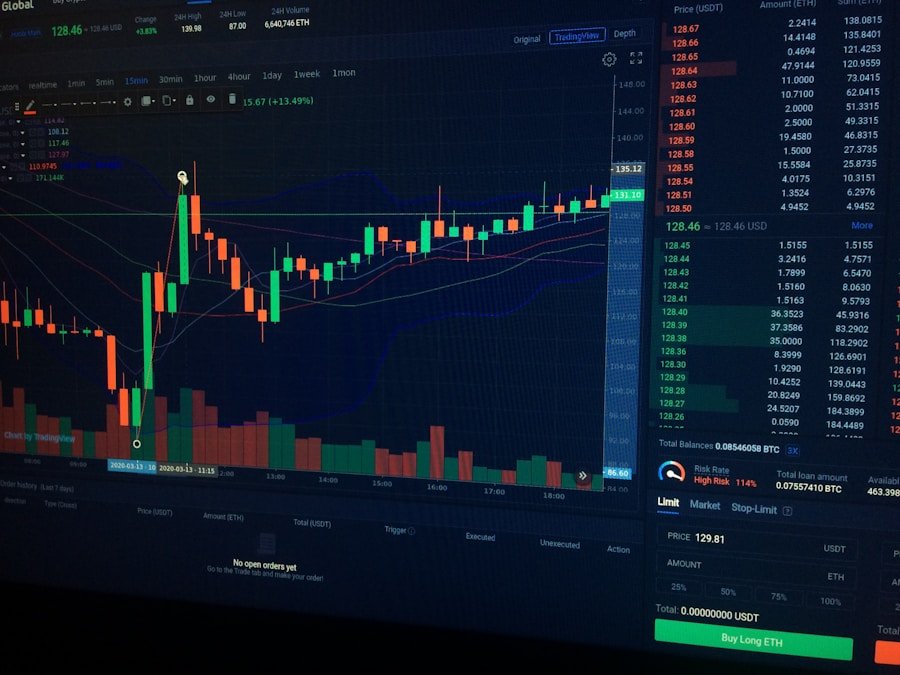
Chart patterns are visual representations of price movements in financial markets, serving as essential tools for traders and investors. These patterns emerge from the historical price data of assets, such as stocks, commodities, or currencies, and can provide insights into potential future price movements. The study of chart patterns is rooted in technical analysis, which focuses on price action rather than the underlying fundamentals of an asset.
By analyzing these patterns, traders can make informed decisions about when to enter or exit trades, ultimately aiming to maximize their profits. The significance of chart patterns lies in their ability to reflect market psychology. Price movements are often driven by the collective behavior of market participants, influenced by factors such as news events, economic indicators, and trader sentiment.
Chart patterns encapsulate this behavior, revealing trends and reversals that can be exploited for trading opportunities. Understanding these patterns is crucial for anyone looking to navigate the complexities of the financial markets effectively.
Key Takeaways
- Chart patterns are visual representations of price movements in the financial markets, which can help traders identify potential trade opportunities.
- Understanding chart patterns is important in trading as they can provide valuable insights into market trends and potential price movements.
- There are different types of chart patterns, such as reversal patterns and continuation patterns, which can be identified and analyzed to make informed trading decisions.
- Traders can use chart patterns to identify potential entry and exit points for trades, as well as to set profit targets and stop-loss levels.
- Implementing risk management strategies, such as setting stop-loss orders and position sizing, is crucial when trading chart patterns to minimize potential losses and maximize profits.
Understanding the Importance of Chart Patterns in Trading
Chart patterns play a pivotal role in the decision-making process for traders. They serve as visual cues that can indicate potential price movements, helping traders to identify trends and reversals. For instance, a bullish flag pattern may suggest a continuation of an upward trend, while a head and shoulders pattern could signal a potential reversal from bullish to bearish sentiment.
By recognizing these patterns, traders can position themselves advantageously in the market. Moreover, chart patterns are not just limited to short-term trading; they can also be applied to longer time frames. Swing traders and position traders often rely on these patterns to make strategic decisions over days, weeks, or even months.
The ability to interpret chart patterns allows traders to align their strategies with market dynamics, enhancing their chances of success. This adaptability is particularly important in volatile markets where price movements can be rapid and unpredictable.
Identifying and Analyzing Different Types of Chart Patterns
There are numerous chart patterns that traders commonly use, each with its unique characteristics and implications. Among the most recognized patterns are continuation patterns, such as flags and pennants, and reversal patterns like head and shoulders or double tops and bottoms. Continuation patterns indicate that the prevailing trend is likely to continue after a brief consolidation period.
For example, a bullish flag pattern forms after a strong upward movement followed by a period of consolidation, suggesting that the price will continue to rise once the pattern completes. Reversal patterns, on the other hand, signal a potential change in trend direction. The head and shoulders pattern is one of the most well-known reversal formations, consisting of three peaks: a higher peak (head) between two lower peaks (shoulders).
When this pattern appears after an uptrend, it often indicates that the price may soon decline. Conversely, a double bottom pattern suggests that after a downtrend, the price has found support at two distinct levels before reversing upward. Identifying these patterns requires keen observation and practice, as they can vary in appearance and context.
Using Chart Patterns to Identify Trade Opportunities
| Chart Pattern | Success Rate | Average Profit/Loss Ratio |
|---|---|---|
| Head and Shoulders | 83% | 2.5:1 |
| Double Top/Bottom | 75% | 3:1 |
| Triangle | 70% | 2:1 |
| Cup and Handle | 78% | 2.8:1 |
Once traders have identified chart patterns, they can leverage this information to pinpoint trade opportunities. The key is to wait for confirmation signals before entering a trade. For instance, in the case of a bullish flag pattern, traders typically look for a breakout above the upper trendline of the flag formation as confirmation that the upward trend will continue.
This breakout often comes with increased volume, further validating the trade decision. In addition to breakouts, traders may also use other technical indicators in conjunction with chart patterns to enhance their analysis. For example, moving averages can help confirm trends indicated by chart patterns.
If a bullish flag pattern forms above a rising moving average, it adds credibility to the bullish outlook. Similarly, oscillators like the Relative Strength Index (RSI) can provide insights into overbought or oversold conditions that may influence trade decisions based on chart patterns.
Implementing Risk Management Strategies when Trading Chart Patterns
Risk management is an integral aspect of trading that cannot be overlooked when utilizing chart patterns. Even with a well-defined pattern and confirmation signals, there is always the possibility of unexpected market movements. Therefore, traders must establish clear risk management strategies to protect their capital.
One common approach is to set stop-loss orders just below key support levels for long positions or above resistance levels for short positions. This ensures that losses are minimized if the trade does not go as planned.
Traders should determine how much capital they are willing to risk on each trade based on their overall trading strategy and risk tolerance. A common rule is to risk no more than 1-2% of total trading capital on any single trade. This disciplined approach helps traders withstand losing streaks without significantly impacting their overall portfolio.
Case Studies: Successful Trades Using Chart Patterns
Breakout from a Cup-and-Handle Pattern
One notable example is the breakout from a cup-and-handle pattern observed in a well-known technology stock. After forming a rounded bottom (the cup) followed by a consolidation phase (the handle), the stock broke out above its resistance level with significant volume. Traders who recognized this pattern entered long positions at the breakout point and enjoyed substantial gains as the stock continued its upward trajectory.
Identifying a Double Top Pattern
Another illustrative case involves a double top pattern formed by a major currency pair in the forex market. After reaching a peak twice at similar price levels, the currency pair began to show signs of weakness.
Capitalizing on the Reversal
Traders who identified this pattern placed short positions upon confirmation of the breakdown below the neckline of the double top. As anticipated, the currency pair experienced a significant decline, allowing those traders to capitalize on the reversal.
Common Mistakes to Avoid when Analyzing Chart Patterns
While chart patterns can be powerful tools for traders, there are several common pitfalls that can lead to poor decision-making. One frequent mistake is relying solely on visual recognition without considering other factors such as volume or market context. A pattern may appear valid on a price chart, but if it lacks accompanying volume or occurs in an unfavorable market environment, it may not yield the expected results.
Another common error is entering trades prematurely before receiving confirmation signals. Traders may become overly eager when they spot a potential pattern and jump into trades too early, only to face losses when the anticipated movement does not materialize. Patience is essential; waiting for clear breakout or reversal signals can significantly improve trading outcomes.
Maximizing Trade Opportunities through Chart Pattern Analysis
Chart patterns are invaluable tools for traders seeking to navigate financial markets effectively. By understanding their significance and learning how to identify and analyze various types of patterns, traders can uncover potential trade opportunities that align with market trends. Implementing robust risk management strategies further enhances their ability to capitalize on these opportunities while protecting their capital.
Through diligent practice and continuous learning from both successes and mistakes, traders can refine their skills in chart pattern analysis. As they gain experience in recognizing these formations and understanding their implications within different market contexts, they will be better equipped to make informed trading decisions that maximize their potential for success in an ever-evolving financial landscape.
If you are interested in learning more about how to choose the right trading strategy to complement your chart analysis, I recommend checking out this informative article on how to choose the right trading strategy. It provides valuable insights and tips on selecting the best approach for your trading style. Additionally, if you are looking for free resources to enhance your trading experience, you can explore the offerings on Pine Indicators’ free section. And if you are interested in customizing your TradingView indicators to better suit your needs, be sure to check out their